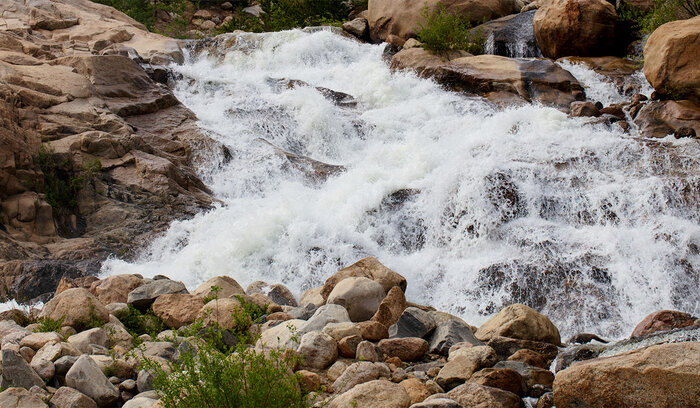
Diluvial



[də-LOO-vee-əl]
Part of speech: adjective
Origin: Latin, mid-17th century
1.
Relating to a flood or floods, especially the biblical flood.
Examples of Diluvial in a sentence
"The diluvial rain transformed the barren field into a temporary lake."
"City planners needed to ensure nothing was built on the diluvial plains."
About Diluvial
Diluvial” has its roots in the Latin verb “diluere,” which means “to wash away.” “Percentile” is a word created in English out of several parts. Its basis is the expression “per cent,” which came into English in the 13th century from the Italian “per cento.” This expression is derived from the Latin “per,” meaning “for each,” and “centum,” meaning “hundred.” The addition of the suffix “-ile” indicates the division of that hundred into multiple groups of equal size. While hyperborean" came into English through Middle English and Latin, its roots are in the Greek word "huperboreos." That word can be broken down into "huper" ("beyond") and "boreas" ("north wind").
Did you Know?
Beginning around the mid-17th century, geologists and archaeologists used the adjective “diluvial” to refer to a distinct geological turning point associated with Noah’s biblical flood. It acquired its modern meaning in the 1800s; an early example of modern usage is found in Caroline M. Kirkland’s essay “Forest Life,” from 1850.